Thinking about buying in one of Edgewater’s new condo towers? The glossy renderings are easy to love, but choosing the right building takes more than falling for a bay view. If you want to protect your budget, your lifestyle, and your future resale position, you need to know what to compare and what to question. Let’s dive in.
Edgewater’s market position matters
Before you compare floor plans or finish packages, it helps to understand where Edgewater sits in the Miami condo landscape. According to the Miami Downtown Development Authority’s 2025 residential analysis, Edgewater had 7,904 existing condo units, 678 under construction, and 237 proposed. In Q2 2025, the average sale price per unit reached $1 million.
That pricing puts Edgewater above both Brickell and the Central Business District in the same report. Brickell’s average sale price per unit was $939,000, while the CBD averaged $844,000. That tells you Edgewater is often valued as a more view-driven, scarcity-based market.
At the same time, Edgewater is not the fastest-moving submarket in Greater Downtown. The same DDA report shows average days on market at 176, compared with 150 in Brickell and 156 in the CBD. For you as a buyer, that means the right unit can still command a premium, but buyers in this area tend to be selective.
Compare projects the right way
One of the biggest mistakes buyers make is treating every new condo in Edgewater like the same product. In reality, the current pipeline includes large waterfront towers, branded residences, boutique bayfront buildings, and mixed-use projects. Each one creates a different ownership experience and a different resale story.
Use current projects as your benchmark
A smart evaluation starts by comparing the leading projects side by side. You are not just choosing a home. You are choosing a building identity, operating model, and long-term market position.
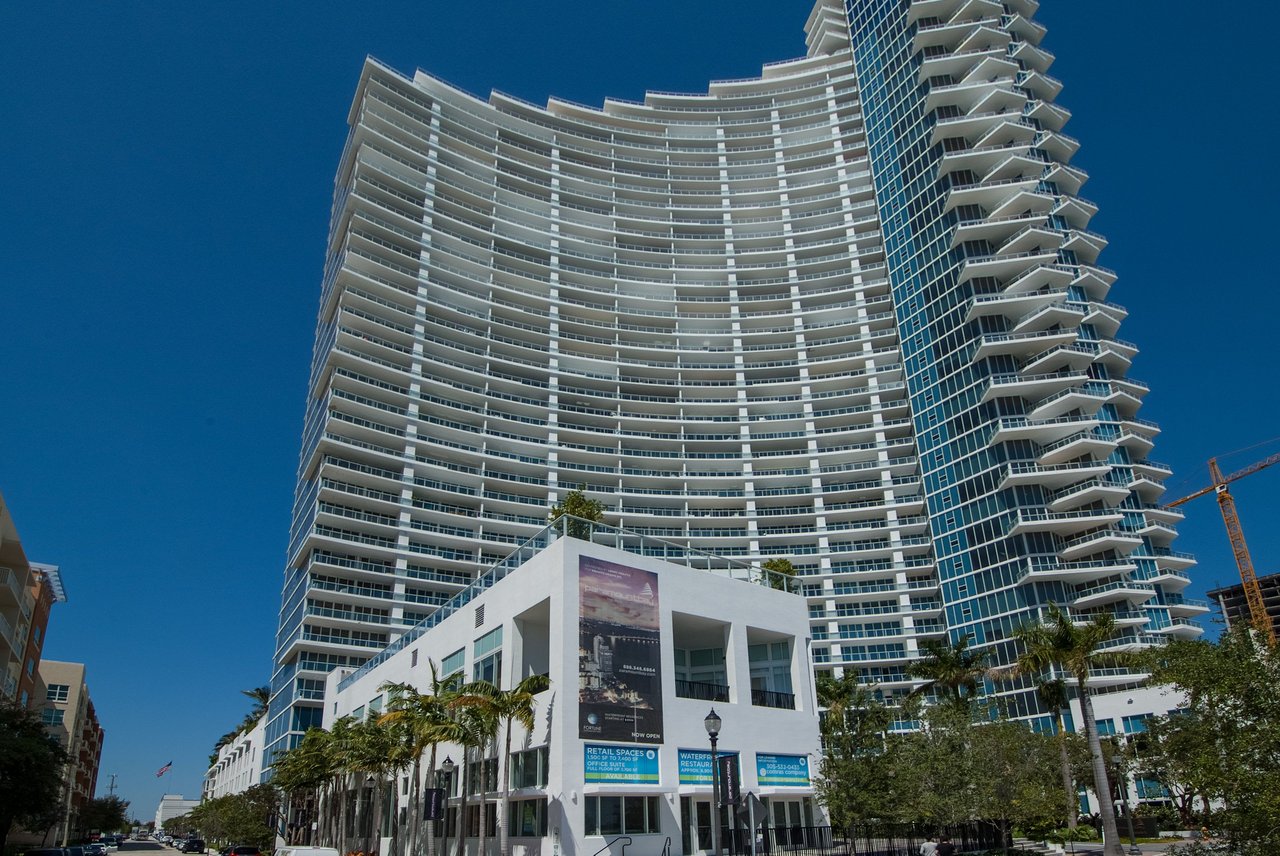
Aria Reserve at 700 NE 24th Street is a two-tower project by Melo and Arquitectonica. The south tower has been delivered, and the north tower is expected in Q2 2026. The project highlights 547 linear feet of baywalk, flow-through four-bedroom residences, co-working space, and spa and fitness programming, which makes it a useful benchmark for full-service waterfront living in Edgewater.
EDITION Residences at 2121 N Bayshore Drive is a 55-story waterfront tower by Two Roads Development. It is planned to rise 649 feet, include more than 800 linear feet of bay frontage, and offer 185 homes from one-bedroom-plus-den layouts to four-bedroom residences, plus three tri-level penthouses. Because it is positioned as a fully serviced branded residence, it may carry strong marketing appeal, but it can also come with higher operating expectations.
Villa Miami at 710 NE 29th Street is under construction and stands out for its low-density format. The tower is planned at 56 stories and 650 feet, but with only 70 half-floor and full-floor residences. It also includes a club, spa and salon, restaurant, docks, and estate-manager style service, which places it firmly in the trophy-branded category.
Cove Residences at 456 NE 29th Street offers a smaller bayfront option with 134 homes and direct Biscayne Bay frontage. Meanwhile, 3200 Biscayne Boulevard adds a different category to the conversation, with a mixed-use format that includes hotel accommodations and residential units. These projects matter because they show Edgewater is not growing in just one direction.
Don’t ignore completed towers
New construction should always be measured against the resale standard already in place. In Edgewater, completed towers like Elysee and Missoni Baia help define what buyers already expect from the high-end segment. That affects how a new project will be judged when it eventually competes for resale buyers.
If a pre-construction tower is priced aggressively, ask whether its views, layout efficiency, services, and building pedigree truly exceed the established resale competition. A beautiful sales gallery does not erase what the neighborhood has already delivered.
Evaluate the developer, not just the brand
A strong name on the brochure can attract attention, but it should not be your only filter. In Edgewater, buyers will see developers and partners such as Melo, Two Roads, Terra, One Thousand Group, Urbanica, EDITION, and Major Food Group. Those names matter, but what matters more is who is actually responsible for delivering the building.
Check the legal developer entity
The brand on a rendering is not always the same as the entity behind the project. You should confirm the exact legal developer, review what similar towers that group has already delivered, and look at whether those buildings held value in resale. That gives you a more practical way to judge execution risk.
Ask about delivery history
If a sponsor has completed comparable high-rise projects, that is useful context. If it has not, that does not automatically make the building a bad choice, but it should shape your questions. In a selective market like Edgewater, proven delivery history can support future buyer confidence.
Review amenities as a budget item
Amenities can absolutely improve your daily life, but they also affect what you pay to own the unit. In luxury towers, buyers often focus on the spa, restaurant, co-working lounge, guest suites, docks, or resort deck without thinking through how those features operate over time.
Ask what the amenities cost to maintain
Large amenity programs usually mean more staffing, more maintenance, and more insurance exposure. That is especially relevant in branded or hotel-style residences such as EDITION Residences and Villa Miami. If you are comparing buildings, it is smart to ask not only what is promised, but what will likely be funded and maintained in year one and year five.
Match amenities to how you live
If you will never use a private dining room, club program, or dock service, those features may add less value to you than to another buyer. On the other hand, if you want a high-service lifestyle and expect a hospitality-style experience, a fuller amenity package may be worth the added cost. The key is making sure the building fits your habits, not just your wish list.
Study Florida condo reserve rules
For any condo buyer in Florida, reserves and building planning now deserve much more attention. This is especially important in high-rise ownership, where long-term capital needs can materially affect monthly costs.
Understand SIRS requirements
Florida law requires residential condo associations with buildings three habitable stories or higher to complete a structural integrity reserve study at least every 10 years. Owner-controlled associations that existed on or before July 1, 2022, had to complete that study by December 31, 2025.
For budgets adopted on or after December 31, 2024, associations that are required to obtain a SIRS may not vote to fund less than the required reserves for covered items. Developer-controlled associations also may not waive reserves before turnover. For you, that means reserve funding is not a side issue. It is a core ownership cost.
Think beyond the first year
Even if you are buying brand new construction, you should underwrite the building as a long-term asset. A tower can feel flawless at delivery and still face meaningful capital needs later. Looking at projected reserves, operating budgets, and the building’s service model can help you avoid surprises.
Understand milestone inspections
Florida’s milestone inspection law is another important part of condo evaluation. Buildings that are three habitable stories or higher and subject to condo or co-op ownership must have a milestone inspection by the end of the year they turn 30, and every 10 years after that. In some saltwater-adjacent local circumstances, the local enforcement agency can require the first inspection at 25 years.
This may sound far away if you are buying new construction, but it still matters. A condo purchase is not just about launch pricing and finishes. It is also about how the property will age and what future owners will need to budget for.
Protect your view and resale potential
In Edgewater, views are one of the biggest drivers of value. That also means they deserve a deeper level of scrutiny than many buyers give them.
Prioritize defensible view corridors
Margaret Pace Park at 1745 N Bayshore Drive is a major waterfront feature in the neighborhood, and projects like EDITION Residences specifically market direct bay frontage and baywalk access connected to the park. Aria Reserve also emphasizes its baywalk frontage and east-facing waterfront views with west-facing sunset exposure from bedrooms. In general, direct-bay, park-adjacent, and high-floor stacks tend to be more defensible than lower-floor or more inland positions.
Check zoning before paying for a view
You should never assume that “unobstructed” means forever. The City of Miami’s Miami 21 framework establishes standards and procedures for new development and redevelopment, and the city provides the official zoning atlas. In a neighborhood with active high-rise development, nearby parcels may still carry future development rights that could affect your view corridor.
This is one of the most important steps in Edgewater. A great unit can lose part of its value story if a future tower changes the visual exposure that made it special in the first place.
Focus on the unit itself
Even in a strong building, not every line performs the same way. Edgewater’s longer average days on market suggest that buyers pay close attention to the details.
Look for the traits buyers value most
In practice, the most resilient Edgewater units often combine three things: a scarce view, an efficient floor plan, and a developer with a proven delivery track record. Features such as corner positions, flow-through layouts, meaningful storage, and real parking can help a unit stand out later. Those factors tend to matter more than surface-level flash.
Think about future buyer behavior
When you eventually sell, your buyer will likely compare your unit against both resale inventory and whatever newer product is available at the time. That is why a highly functional layout can be just as important as a dramatic amenity deck. A building with strong pedigree and a line with lasting appeal usually gives you a better resale position.
Compare Edgewater with Brickell and Downtown
If you are deciding among submarkets, it helps to frame Edgewater correctly. Based on DDA data, Brickell has far more inventory, with 19,021 existing condo units, 3,838 under construction, and 1,304 proposed. The CBD also has a larger pipeline than Edgewater, with 8,892 existing units, 2,728 under construction, and 989 proposed.
That scale can support deeper liquidity in Brickell, while Downtown may appeal to buyers who want a more transit-oriented and walkable setting. Edgewater, by contrast, is more bayfront-driven and often more dependent on the quality of the specific line, floor, and tower. If your priority is scarcity and defensible waterfront appeal, Edgewater may be the better fit.
Final thoughts on buying in Edgewater
The best new condo in Edgewater is not necessarily the one with the tallest tower, the boldest branding, or the longest amenity list. It is the one that matches your lifestyle, holds up under financial and structural scrutiny, and gives you the strongest long-term position in a selective market. When you evaluate the building, the budget, the view corridor, and the unit itself together, you make a much better decision.
If you want help comparing Edgewater towers with a building-specific lens, Marcelo Steinmander offers a discreet, research-driven approach for buyers navigating Miami’s luxury condo market.
FAQs
What makes Edgewater condos different from Brickell condos?
- Edgewater tends to be more bayfront- and view-driven, with a smaller inventory base and a higher average sale price per unit in the DDA’s Q2 2025 data, while Brickell has more inventory and often deeper liquidity.
What should buyers review before buying a new condo in Edgewater?
- You should review the developer’s delivery history, the legal developer entity, the building’s amenity program, likely operating costs, reserve structure, view corridor risks, and how the specific unit compares with current and future resale competition.
Why do views matter so much in Edgewater condo values?
- Views are a major part of Edgewater’s pricing and appeal, especially for direct-bay, park-adjacent, and high-floor residences, so protecting that view potential can directly affect future resale value.
How do Florida reserve rules affect new condo buyers in Edgewater?
- Florida law now requires certain condo associations to maintain required reserves for covered items under structural integrity reserve study rules, which means reserve funding should be treated as a real ownership cost, not an optional detail.
Are branded residences in Edgewater always a better investment?
- Not always. Branded residences can support marketing appeal and buyer interest, but you still need to evaluate the service model, operating costs, developer track record, and the unit’s actual position within the building.
How can buyers protect resale value in an Edgewater condo?
- Buyers can improve resale potential by choosing a unit with a defensible view, an efficient floor plan, strong storage and parking, and a building with a credible developer and competitive position against both resale and future new construction.